Bald Eagle Identification Guide
BALD EAGLE IDENTIFICATION
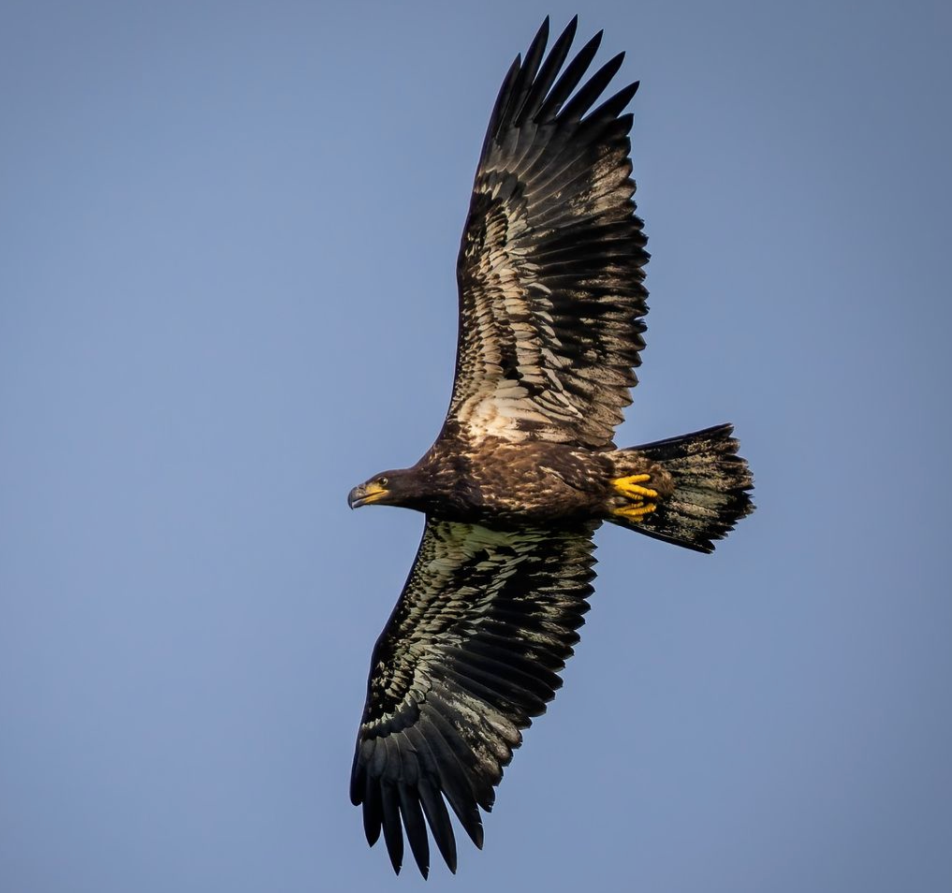
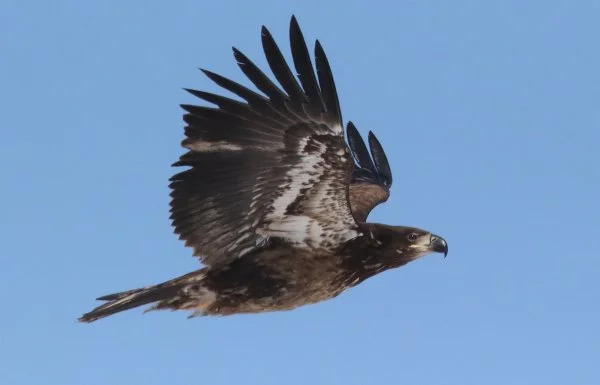
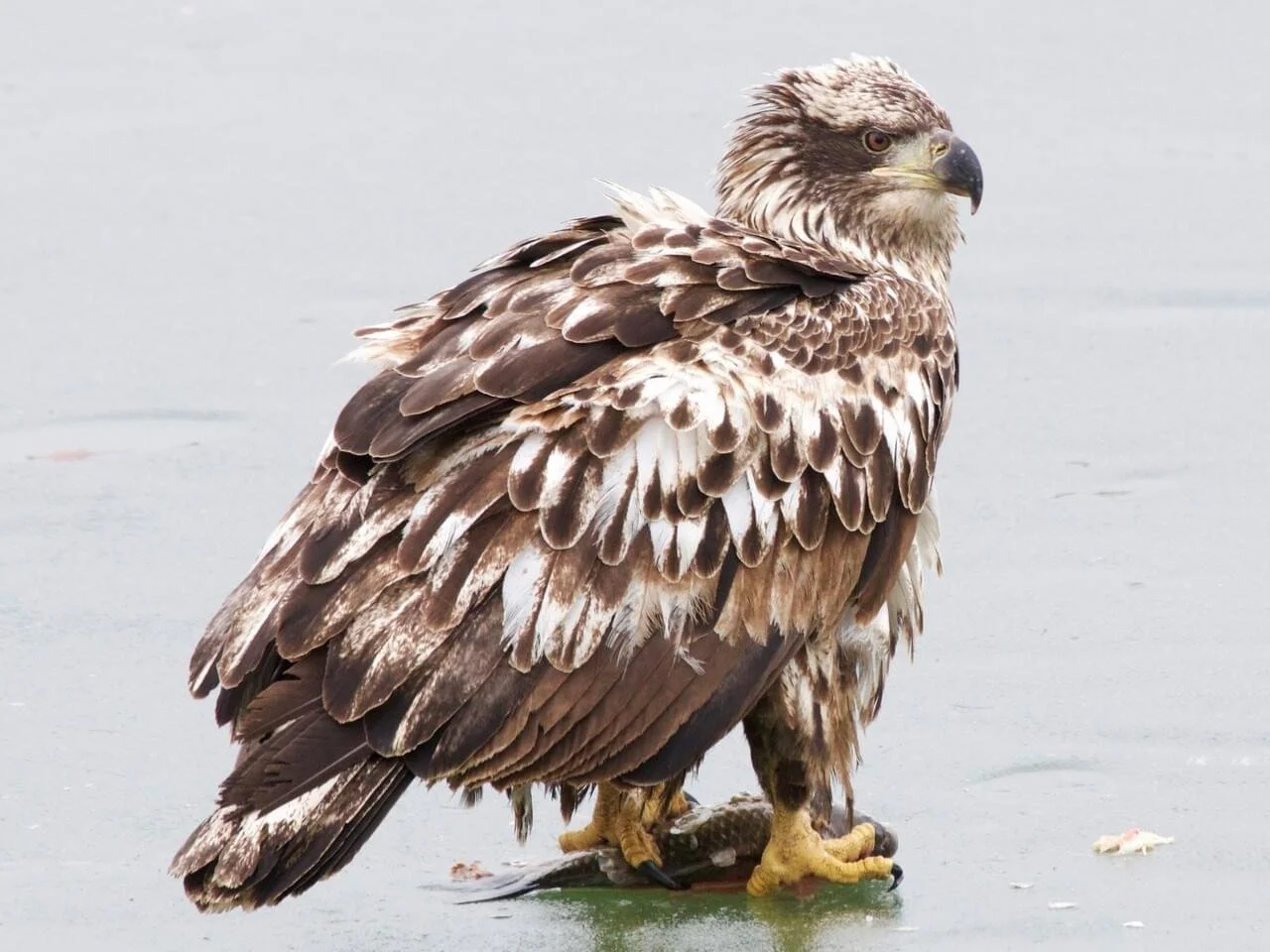
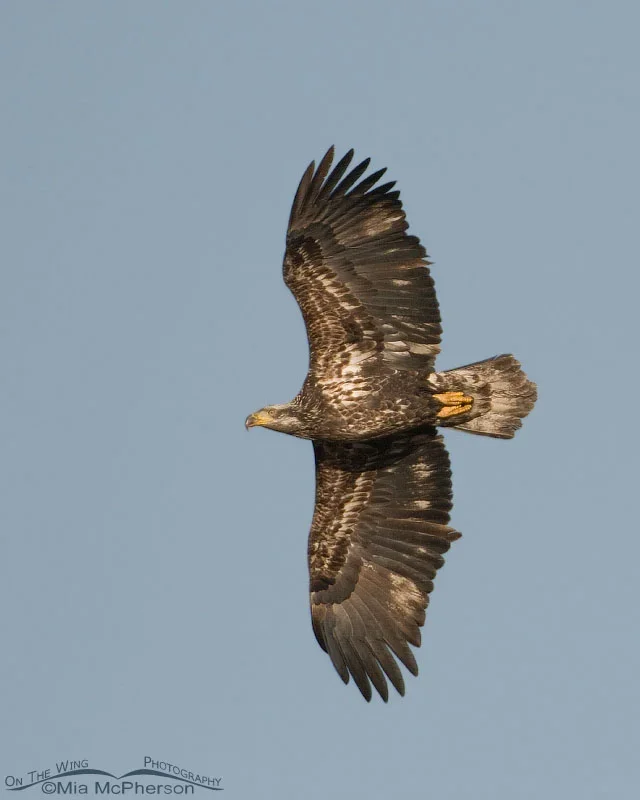
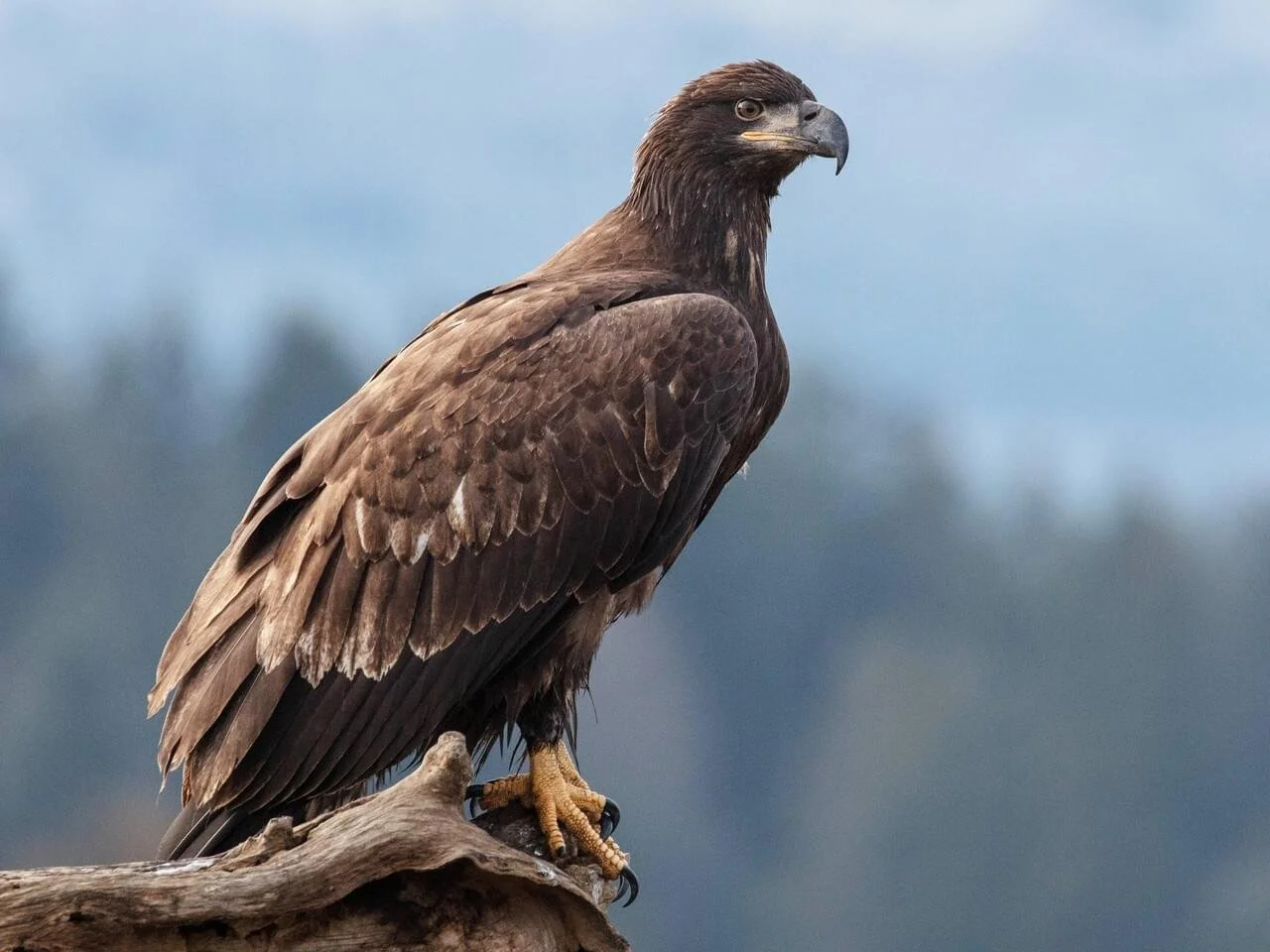
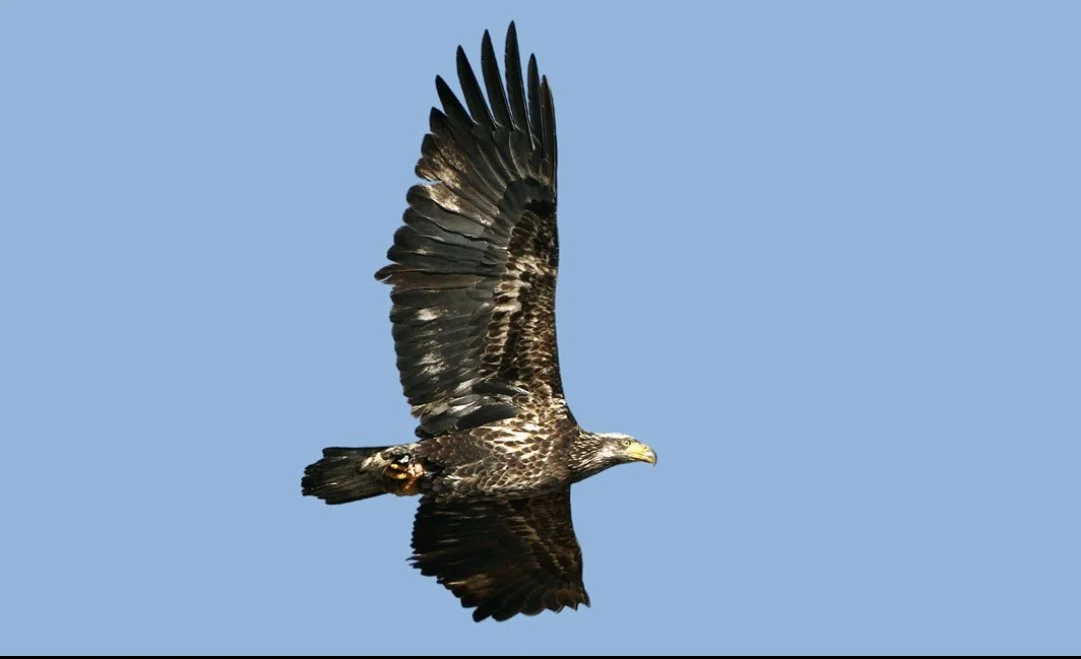
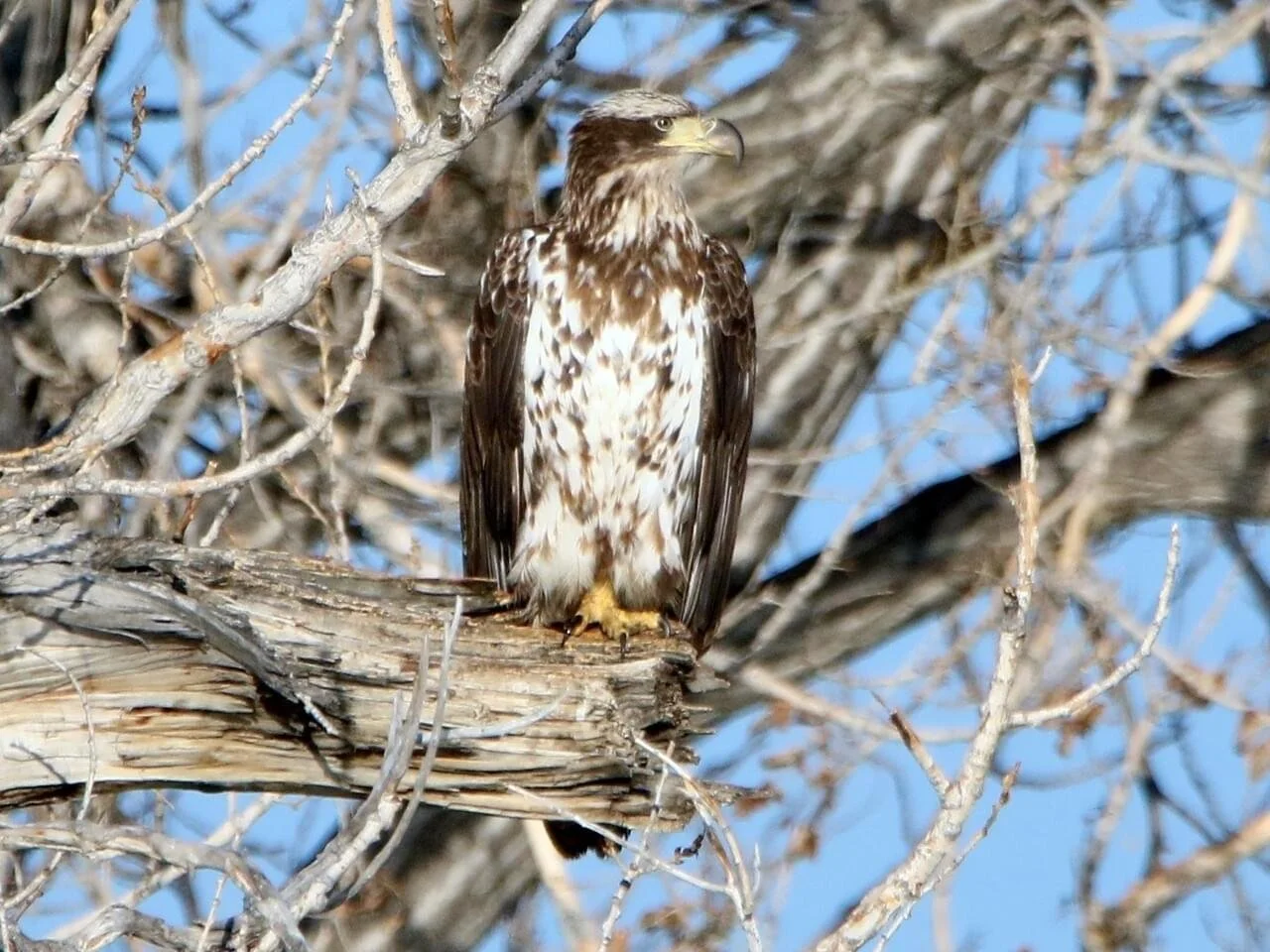
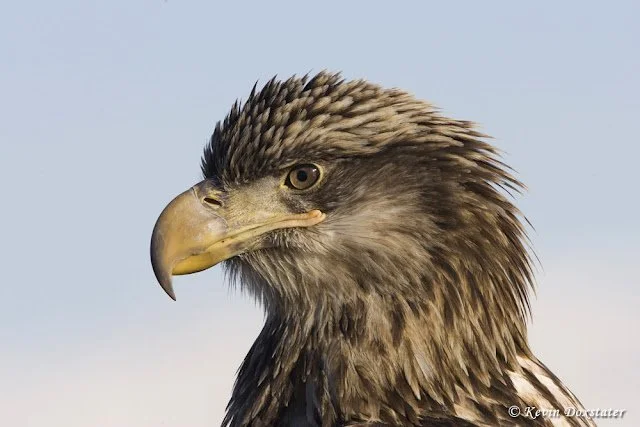
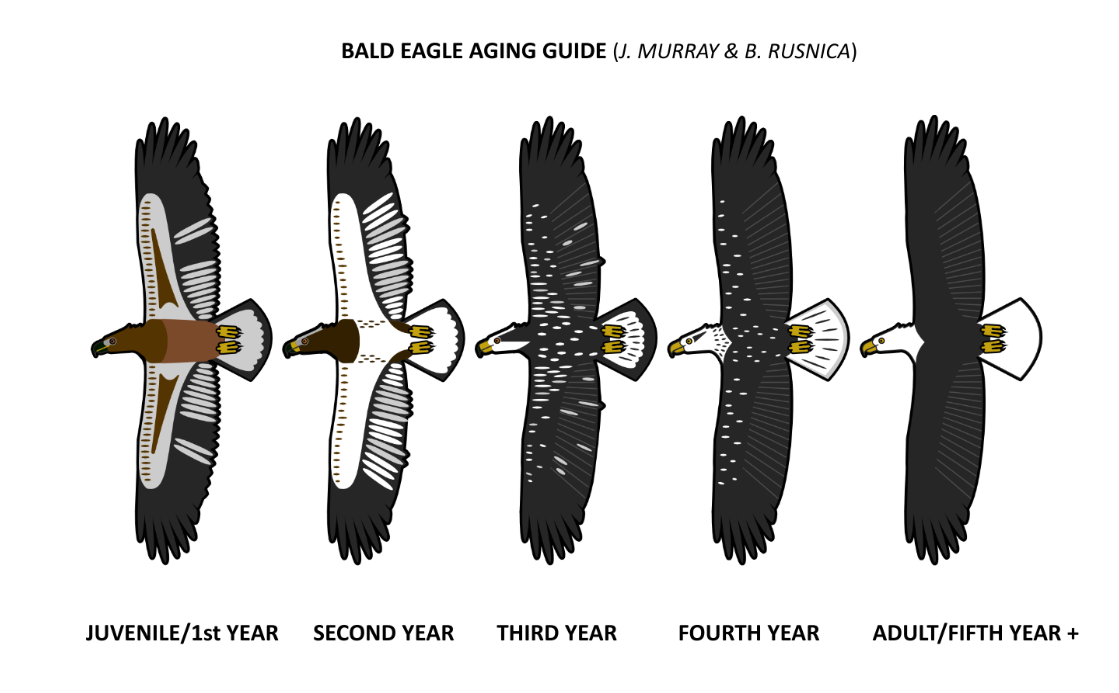
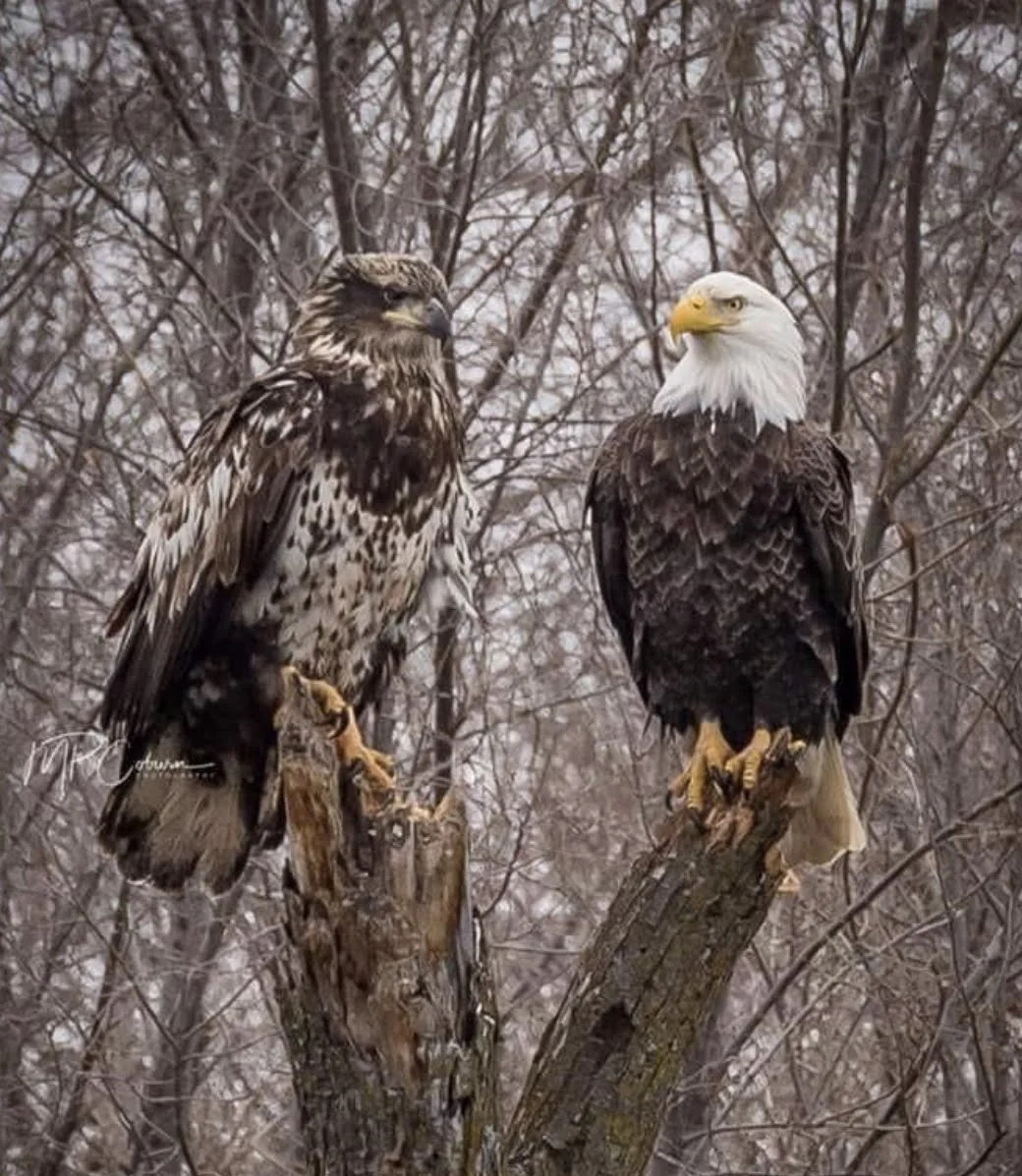
Juveniles / First Year Bald Eagles will appear mostly dark with white wing pits (armpits). Juveniles (hatched in 2025) are brownish overall with dark eyes and bill, and white on the underwing coverts in flight (white wing pits aka "armpits") and some secondaries. The tail is dark with degrees of white mottling.
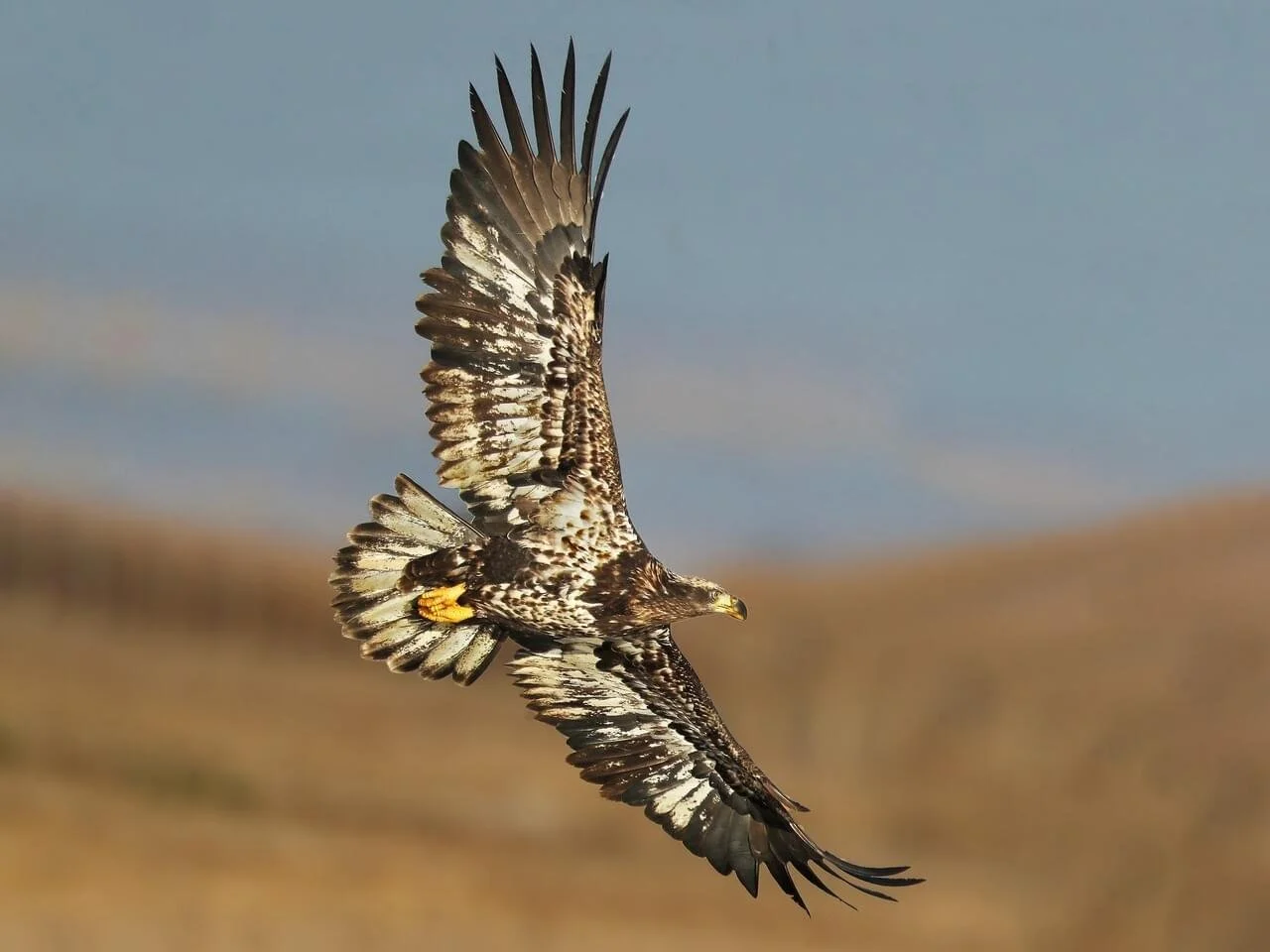
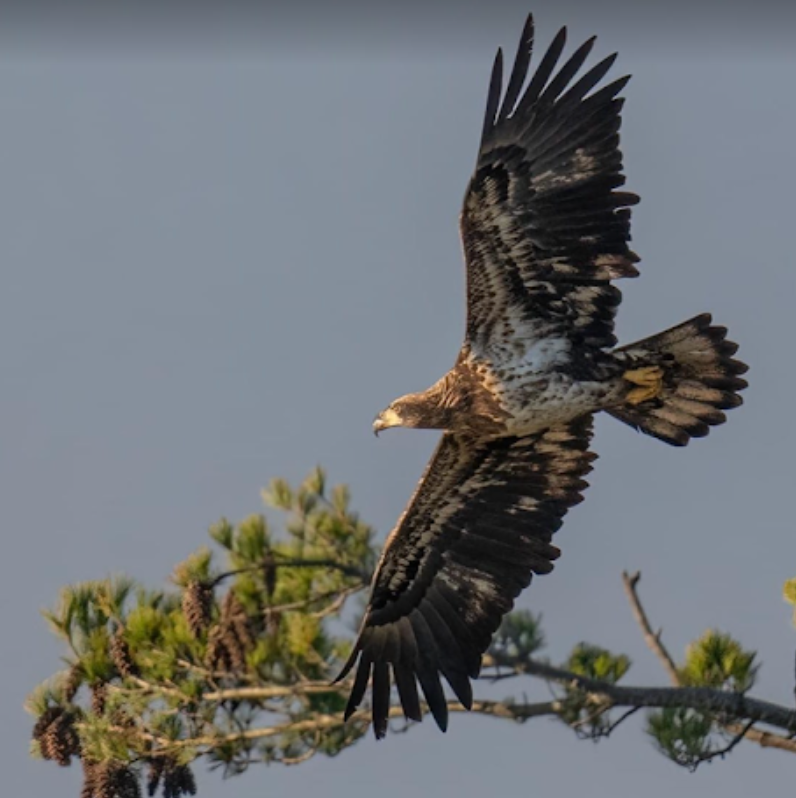
Second Year Bald Eagles (immature/subadult) display the whitest plumage with messy-looking flight feathers (primary and secondary flight feathers molting from juvenile to adult stage). 2nd-year Birds typically have a white belly and upper back, and a dusky bill with hints of yellow at the base. The eyes are still mostly dark. From afar, a second year eagle (hatched 2024) will appear mostly white on the belly, back, and wings and its molting primaries will give the trailing edge of wings a ragged look. Generally, this plumage will be the whitest and messiest looking.
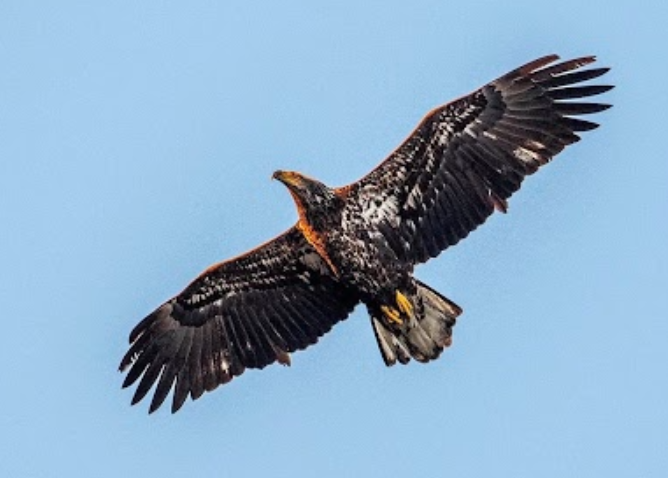
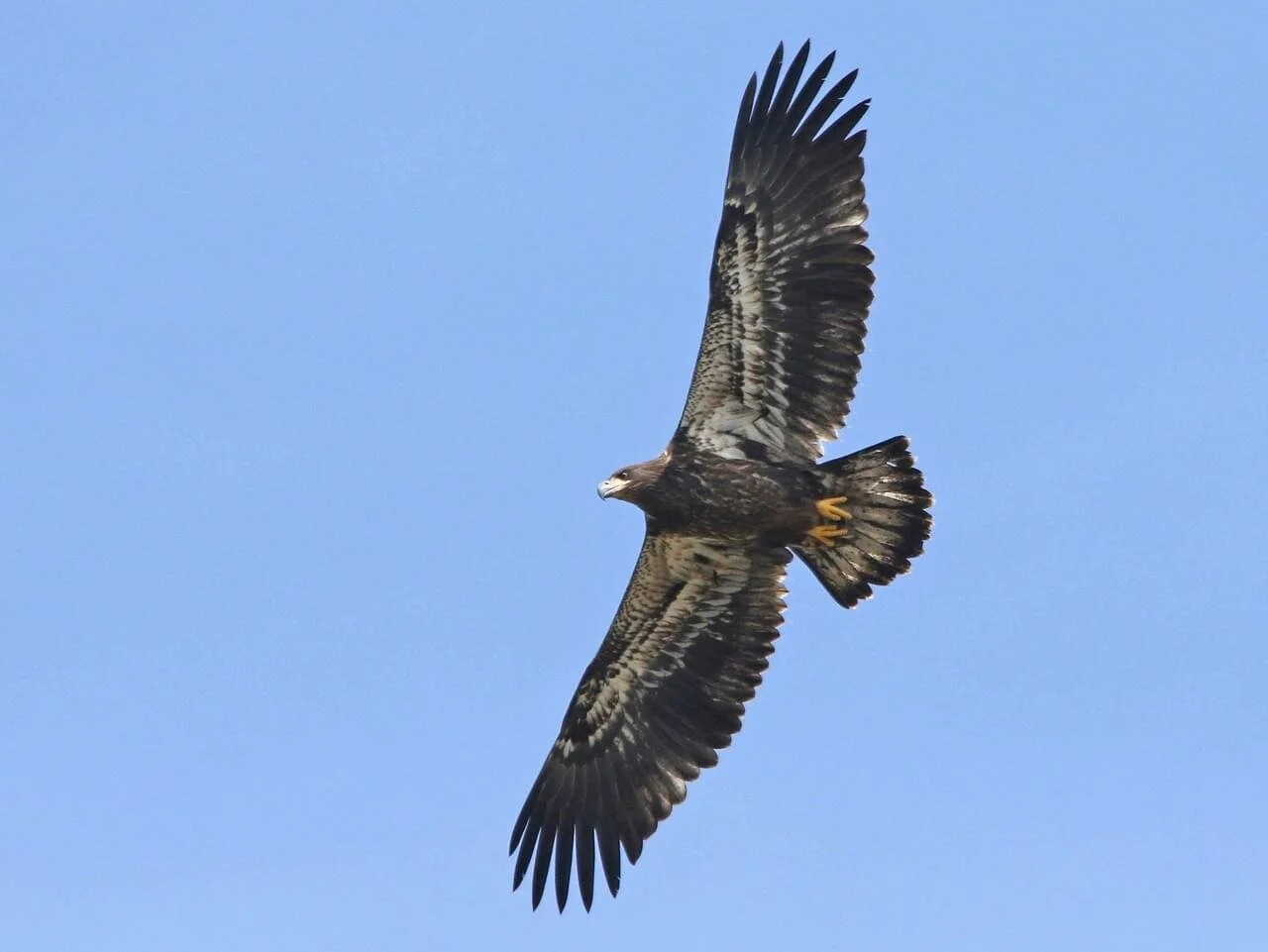
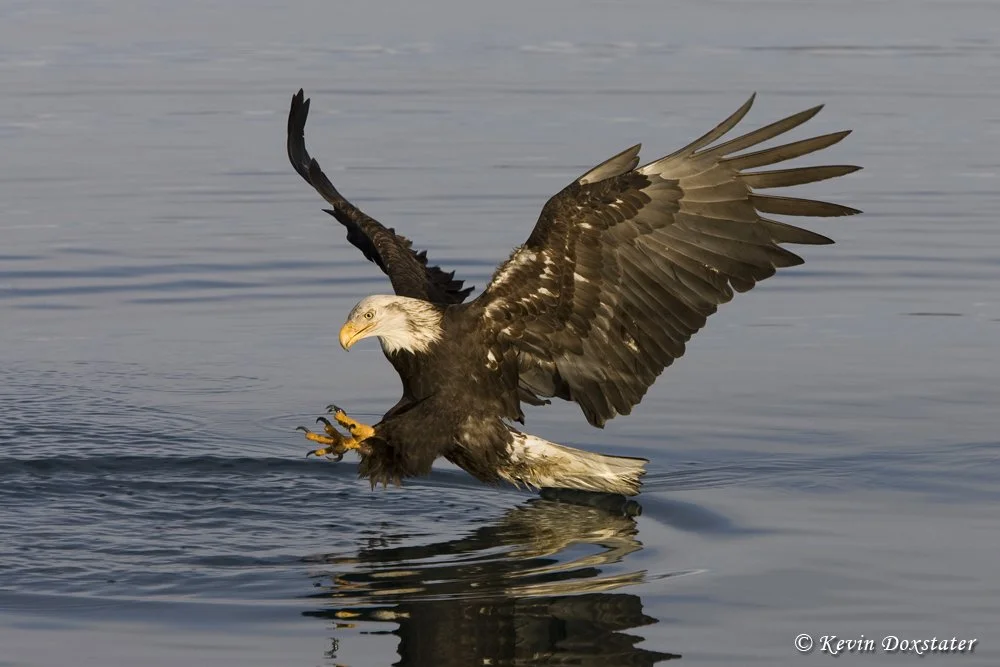
Third Year Bald Eagles (immature/sub adult) transition back to dark brown feathers throughout its body, with a whiter tail, yellower beak, lighter eyes, and a more defined Osprey-like "eye stripe." Third year birds typically have white speckled bellies. The primaries will have less of a messy look on the trailing edge of the wings and will likely have one or two residual juvenile primaries (the longer, pointier ones). White on the back is less prominent than on 2nd-years, but the white on the head is more prominent. 3rd-year birds have adult-shaped wings. From afar, a third year eagle (hatched 2023) will look more adult-like than a second year eagle with a darker belly and back, less white under the wings, a whiter head and a more yellow bill.
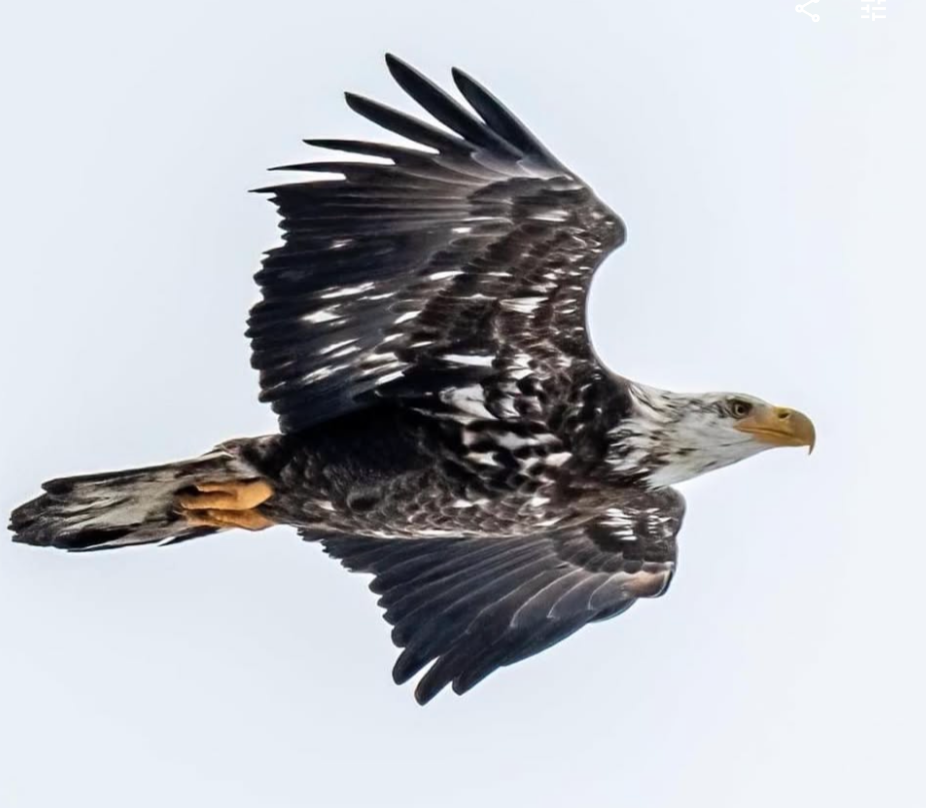
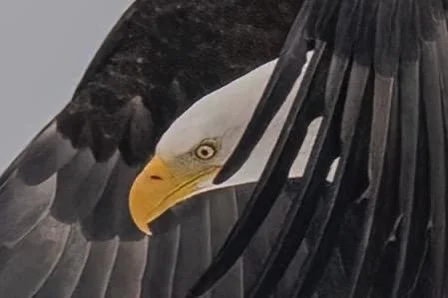
Fourth Year Bald Eagles display adult plumage with a dark body, white head & tail, and a yellow beak but have a faint eye stripe or smudging and usually have dark mottling on the edges of the white tail. In fourth year Bald Eagles, there is still a great deal of variation of feather plumage but generally, a fourth year adult looks like it has full adult / definitive plumage with a white head and a yellow beak but has a faint dark eye stripe, may have some dark mottling on the edges of the tail, and white mottling on the body and/or underwings. Most 4th-year birds have a faint eye-line like an Osprey. Extra Notes: 4th and 5th-year birds are nearly identical to adults but with a few dark specks on the head, black tips on a few tail feathers, and a few white spots on the wing pits. Some 5th year eagles may not appear to have their definitive plumage.
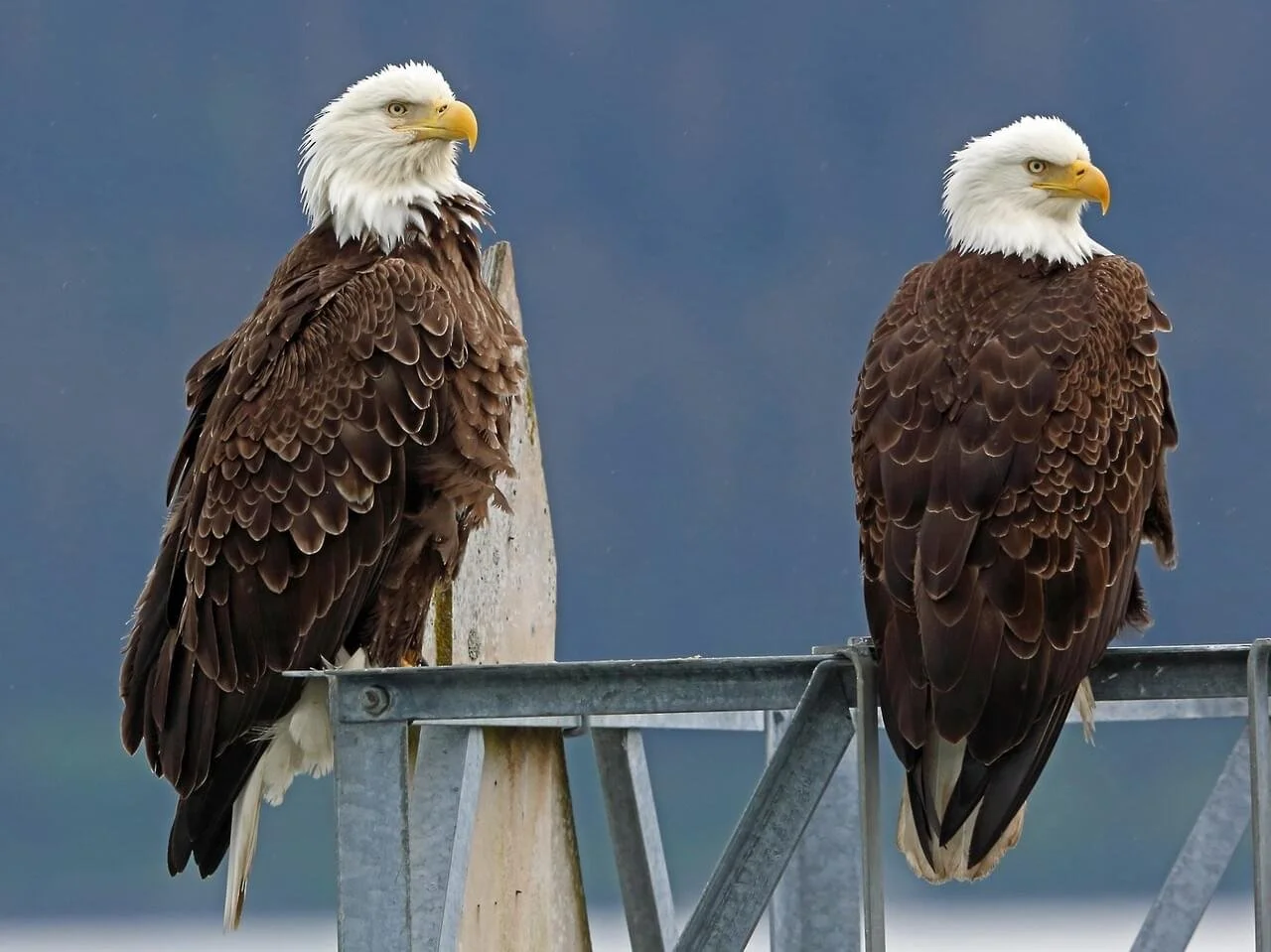
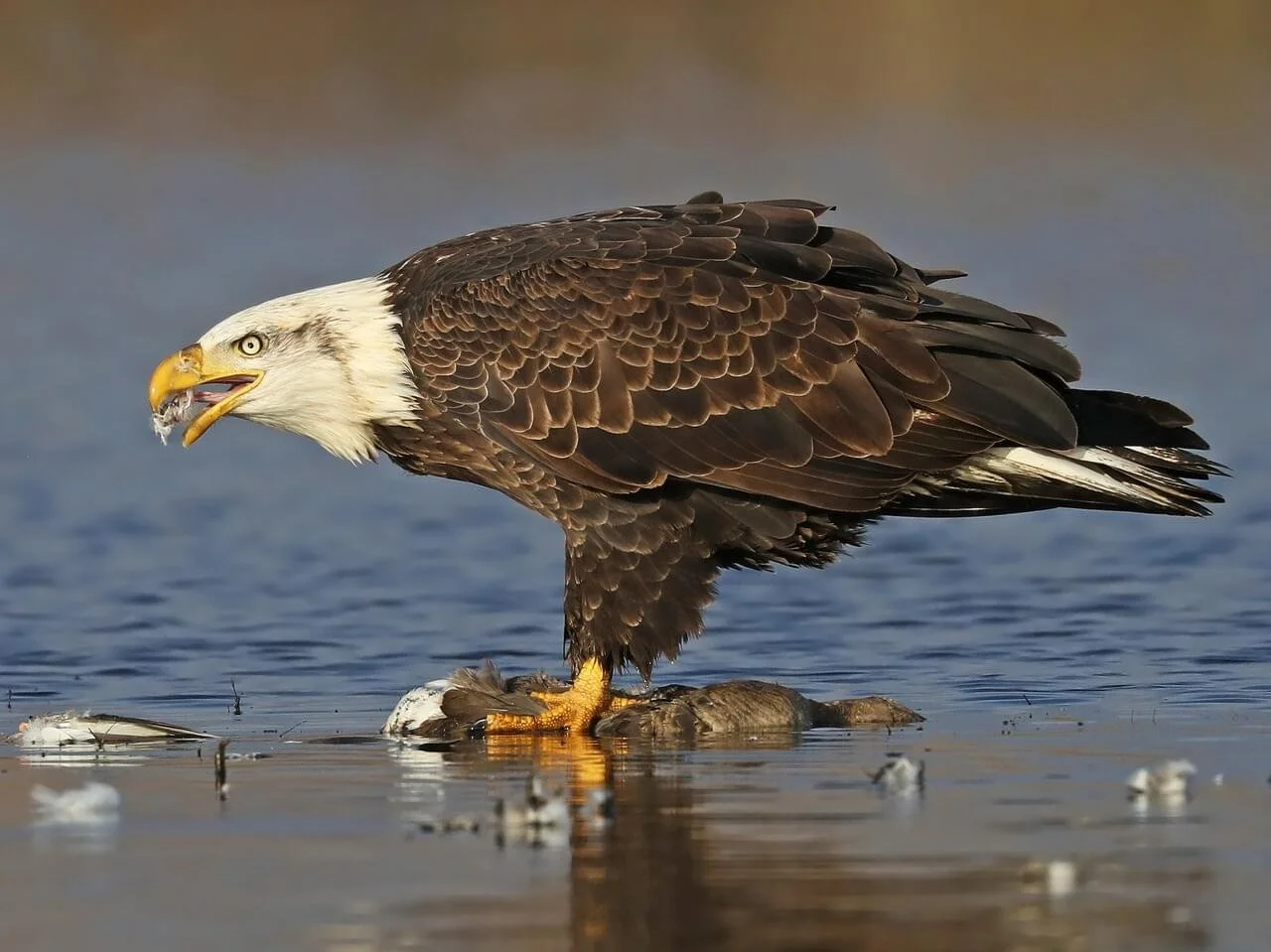
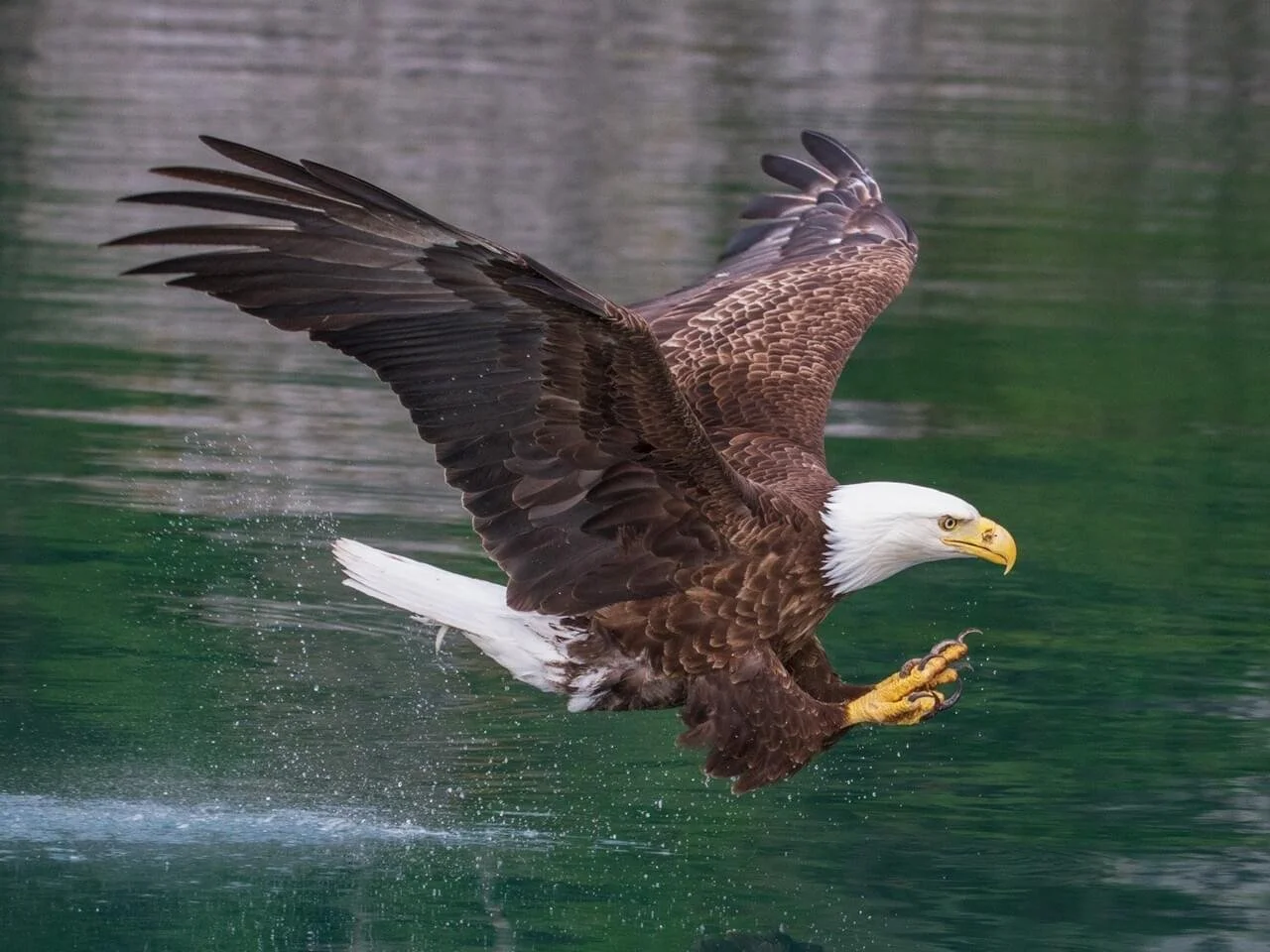
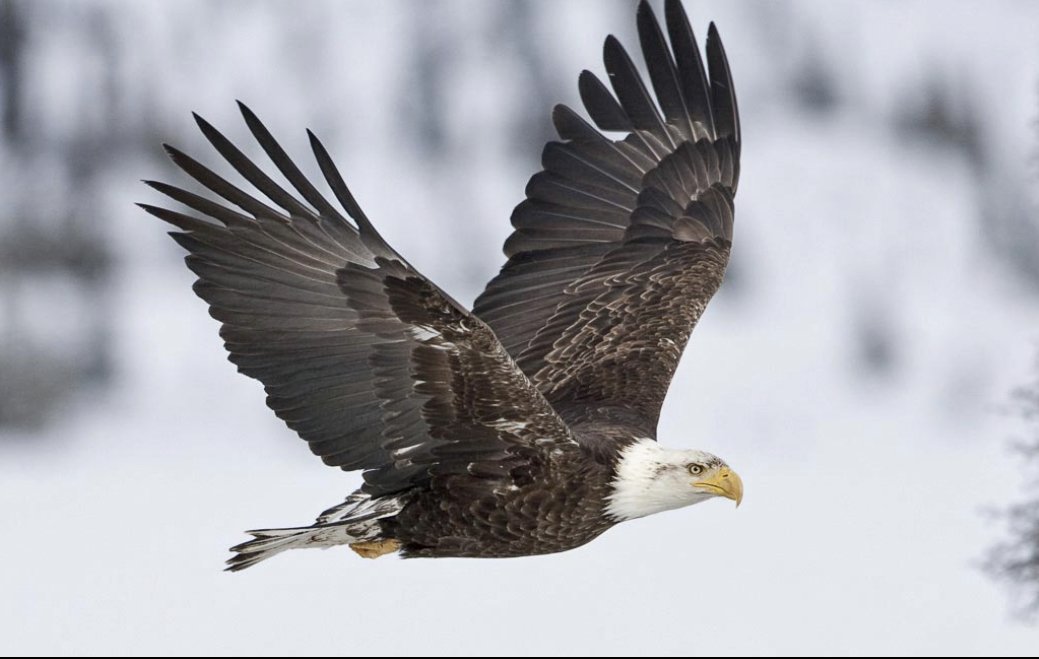
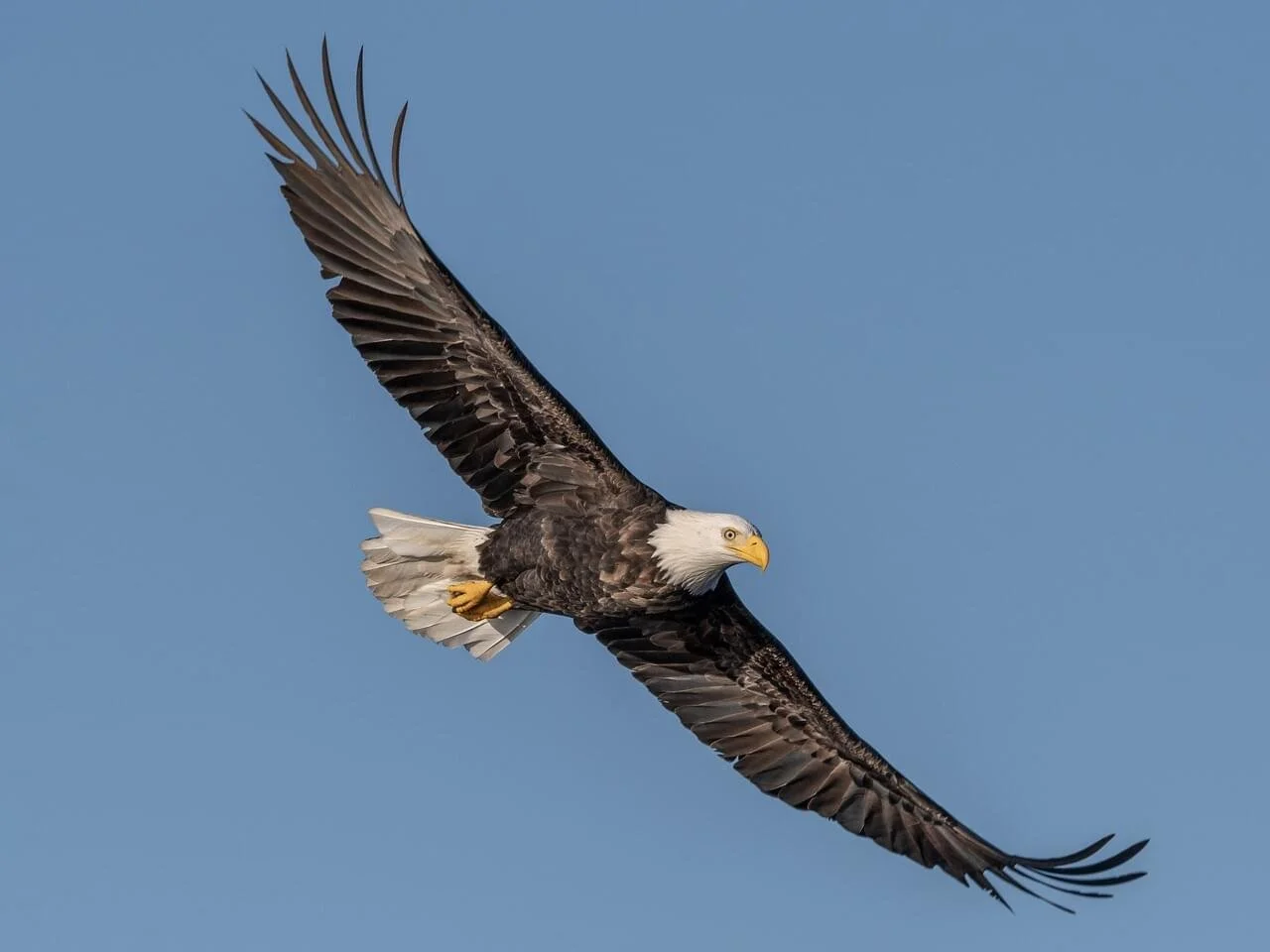
Adults (Definitive Plumage) / Fifth Year Bald Eagles or older: An adult Bald Eagle in full adult (definitive) plumage will have a distinct white head and tail contrasting against dark brown feathers with no white mottling.
NOTE: Each individual eagle is highly variable in plumage and the best way to age a sub-adult is by carefully observing the primaries during flight. Second year eagles have the most irregular primary feathers as they shed the longer, pointier juvenile flight feathers. Third year eagles will display a couple of juvenile flight feathers that noticeably stick out past the trailing edge of the wing.
To summarize the appearance of the different ages of Bald Eagles from afar:
Juveniles / First Year Bald Eagles will appear mostly dark with white wing pits (armpits).
Second Year Eagles have the whitest plumage stage with the messiest flight feathers.
Third Year Eagles have mostly brown bodies and wings with white flecking, mostly white tails with a dark edge, and mostly white heads with smudging and eye stripe.
Fourth Year Eagles appear like adults in definitive plumage, the dark smudging on head and tail may not be apparent without the aid of a spotting scope or zoom lens.
MORE INFO COMING SOON!
Warning: This page is best viewed on a laptop and not a mobile phone. We will update soon so images fall into the correct order for mobile phone viewing.