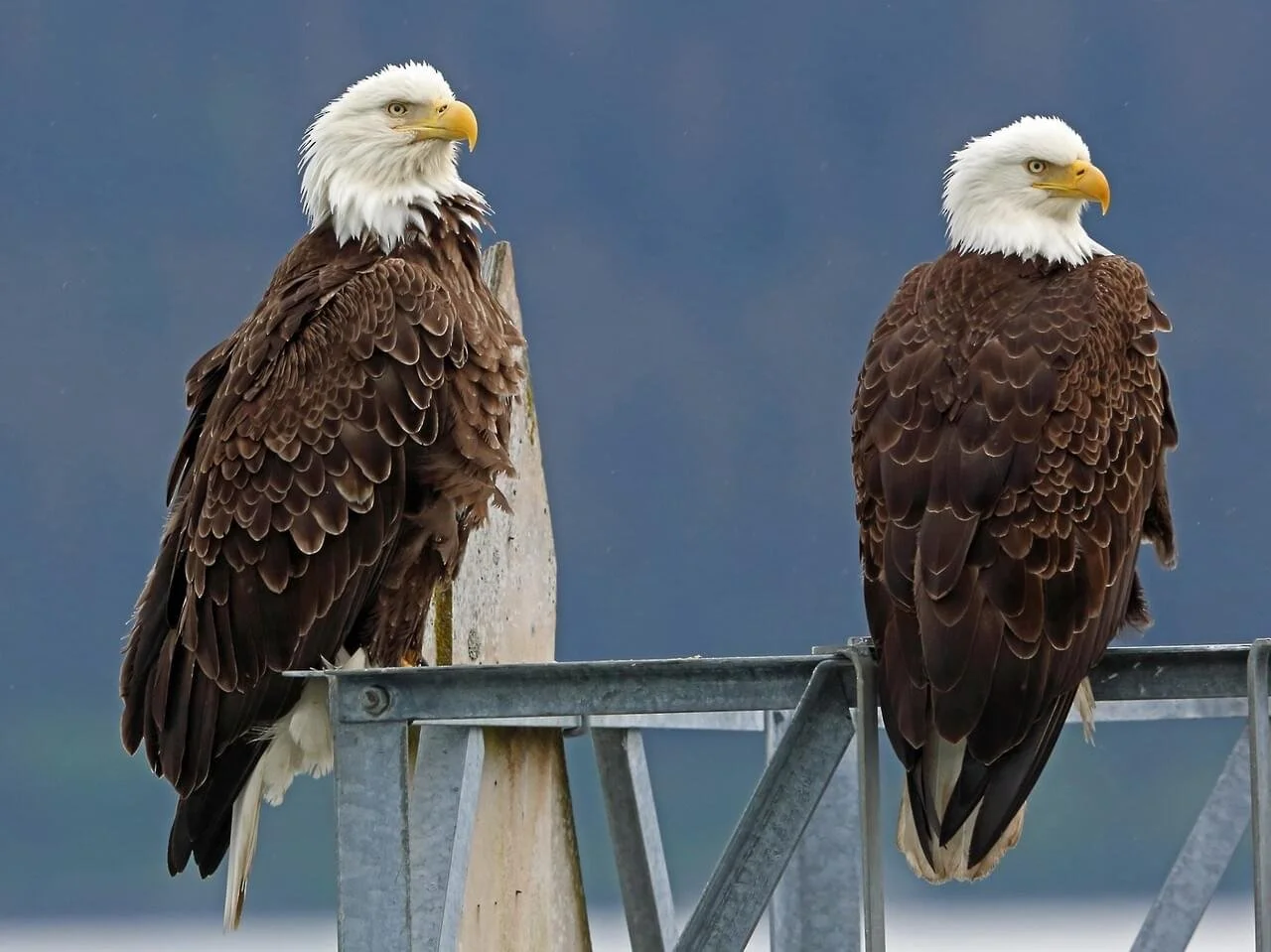
Bald Eagle Viewing Guidelines
Eagle Watching Etiquette and Viewing Tips
Warning: Harassing, disturbing or injuring a bald eagle is a federal offense and carries a penalty of up to $20,000 and/or one year in jail. Remember that bald eagles should remain undisturbed, and it is important that they conserve energy during the winter months.
The following tips for winter eagle viewing will help you to have the best possible experience:
Use a designated bald eagle viewing site.
Scan the tree line for eagles that are perched in the treetops.
Look overhead for eagles soaring high in the sky.
Arrive early (7 am - 9 am) or stay late (3 pm - 4 pm), when eagles are most active.
For the safest & least intrusive eagle viewing, we recommend the following Eagle Etiquette:
Remain in (or immediately next to) your vehicle, and don't approach eagles closer than a quarter mile.
Avoid roosting areas.
Use binoculars or spotting scopes instead of trying to get a little closer.
Don't do anything to try to make the bird fly.
Respect private property and avoid restricted areas.
***IMPORTANT: Bald Eagles are particularly sensitive to human disturbances when establishing a NEW nesting location. Only after a pair has successfully fledged young do they develop a commitment to a nesting site called "site fidelity." Please respect these magnificent eagles and follow DEC guidelines, staying at least a quarter a mile away from eagles at designated viewing areas. More distance is required for new pairs. Use your car as a bird blind to observe or photograph eagles. Please help build the North Fork’s Bald eagle population by giving new pairs plenty of space to avoid potential site abandonment. Please report new nesting sites and roosting sites to the DEC. If you see anyone harassing bald eagles, please call the DEC ECO HOTLINE: 1-844-DEC-ECOs (1-844-332-3267)
When and Where to View Bald Eagles:
Bald eagle viewing during the winter months, from a safe distance and at planned observation sites, can offer an exhilarating and memorable experience. Wintering eagles begin arriving in December, concentrations peak in January, and most are heading back to their nests by February. In winter, eagles tend to congregate around areas of open water, especially when cold weather causes northern lakes and rivers to freeze. This makes Long Island a great place to view wintering eagles, especially around open bays and harbors.
Popular Eagle Viewing Areas on Long Island:
Wertheim National Wildlife Refuge, Shirley
Mashomack Preserve, Shelter Island
William Floyd Estate, Mastic
Centerport Harbor, Huntington
NOTE: These refuges close off areas during the breeding season to avoid disturbances to the nesting pairs.